
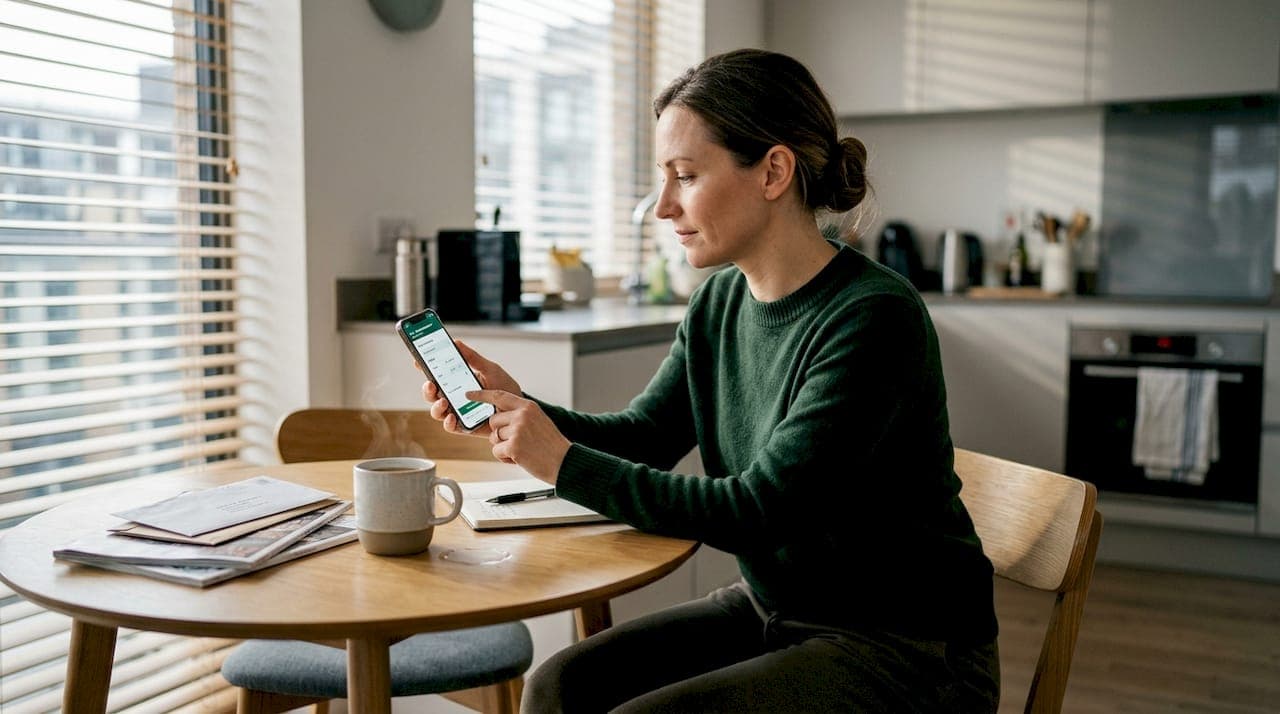
UK healthcare booking has undergone a seismic shift. Record GP access figures show that GP practices received 83 million online consultation requests in the past 12 months, with February 2026 alone hitting 8.6 million requests, up 85% on the previous year. That is not a gradual evolution. It is a fundamental change in how patients access care. Yet many people still feel uncertain about how to navigate these platforms, what they can and cannot do, and how to get the most from them. This guide cuts through the noise, explains the new booking landscape, and helps you use verified digital platforms with confidence.
Table of Contents
- The digital transformation of healthcare access
- How digital booking platforms work in practice
- Benefits and limitations of online healthcare booking
- The future: Integrated, inclusive and holistic platforms
- Why healthcare booking success in 2026 depends on patient empowerment, not just digital tools
- Find seamless healthcare booking options that work for you
- Frequently asked questions
Key Takeaways
| Point | Details |
|---|---|
| Digital booking is now standard | Most UK patients can book GP and wellness services online with speed and convenience. |
| Inclusion remains a challenge | Millions are at risk of digital exclusion, so support and alternative routes are vital. |
| Empowerment drives better care | Patients who understand their booking options get more from the modern healthcare system. |
| Hybrid platforms are the future | Integrated systems combining NHS, private, and wellness bookings are emerging as the next step. |
The digital transformation of healthcare access
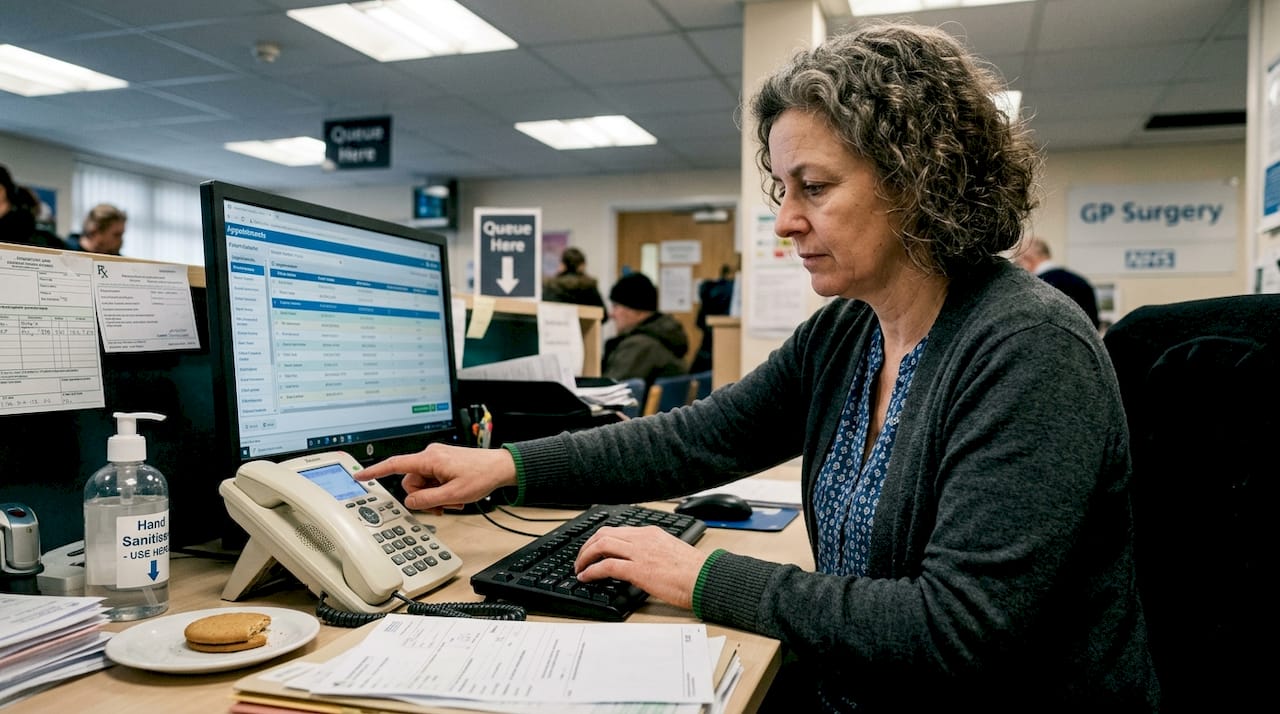
Not long ago, booking a GP appointment meant joining a phone queue at 8am, waiting on hold, and hoping a slot was still available by the time someone answered. That model has not disappeared entirely, but it is no longer the dominant route. Digital booking is now the standard entry point for most NHS services across the UK.
The numbers tell a clear story. The NHS App now has over 40 million registered users in 2026, making it one of the most widely adopted health tools in the country. It handles everything from appointment booking and repeat prescription orders to test results and referral letters. For millions of patients, it has become the first stop for any health query.
The surge in online GP consultations reflects a broader cultural shift. Patients increasingly expect the same digital convenience from healthcare that they get from banking or shopping. And the NHS has, broadly speaking, responded.
| Metric | 2025 | 2026 |
|---|---|---|
| NHS App registered users | ~35 million | 40+ million |
| Monthly online consultation requests (peak) | ~4.6 million | 8.6 million |
| Annual online consultation requests | ~45 million | 83 million |
| Digital prescription requests (annual) | ~55 million | 67 million |
"Digital access is no longer an add-on for the NHS. It is the primary front door for millions of patients, and the infrastructure has scaled to match demand."
Key changes driving this shift include:
- Online consultation forms replacing phone triage at most practices
- Automated appointment reminders reducing missed slots
- Integrated prescription ordering cutting unnecessary repeat visits
- Telehealth video consultations expanding access for rural and mobility-limited patients
This is not just about convenience. It is about capacity. Digital-first systems allow GP teams to triage more effectively, direct patients to the right clinician faster, and reduce administrative burden across the board.
How digital booking platforms work in practice
Understanding the mechanics of a digital booking helps you use the system more effectively. Here is what actually happens when you submit an online consultation request.
- Submit your request. You fill in an online form via your practice website or the NHS App, describing your symptoms or reason for contact.
- Clinical triage begins. A trained member of the GP team reviews your submission, often within the same day. Online forms are processed and routed to the right clinician, frequently within an hour.
- You receive a response. This may be a booked appointment (in-person or video), a prescription, a referral, or self-care advice.
- Reminders are sent automatically. SMS and email notifications confirm your appointment and reduce the likelihood of forgetting.
- Follow-up is managed digitally. Test results, referral updates, and prescription renewals all flow through the same platform.
The UK booking platform features available today go well beyond simple scheduling. Integrated intake forms mean your GP already has context before the appointment begins. Prescription tracking means you are not chasing the surgery for updates. It is a connected experience, not a fragmented one.
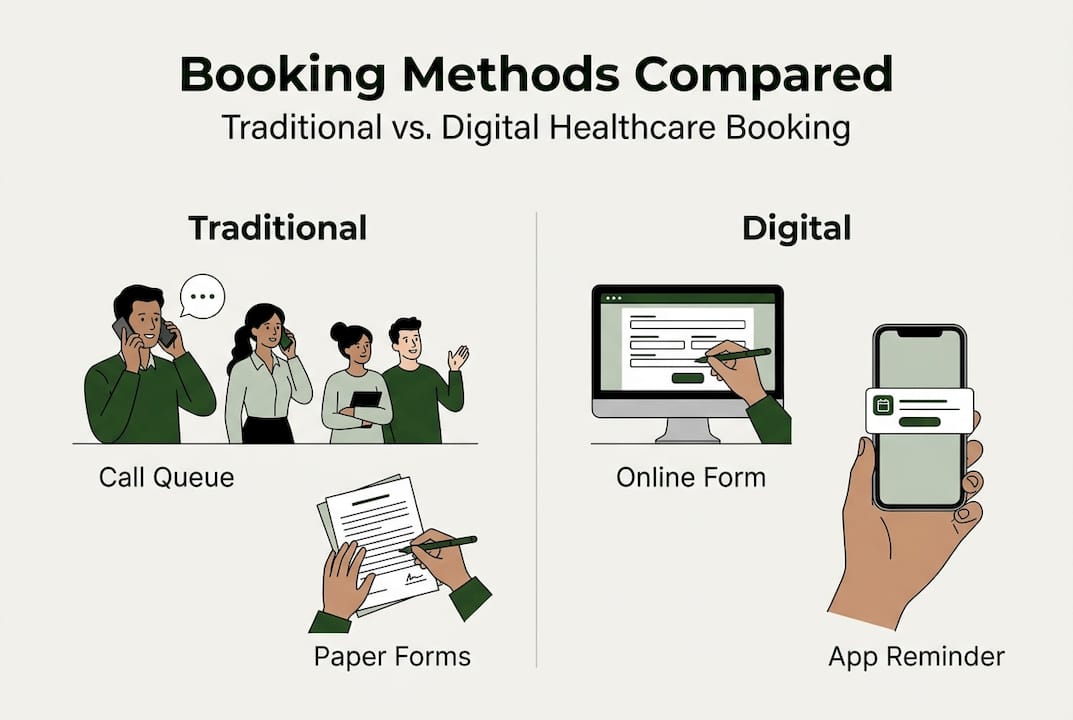
Comparison: Traditional vs. digital booking
| Step | Traditional booking | Digital booking |
|---|---|---|
| Initial contact | Phone call, often queued | Online form, submitted anytime |
| Triage | Receptionist verbal assessment | Clinical review of written symptoms |
| Appointment type | Usually in-person | In-person, phone, or video |
| Reminders | None or manual | Automated SMS and email |
| Prescription ordering | In-person or phone request | App-based, tracked digitally |
| Response time | Same day if lucky | Often within an hour |
Pro Tip: When submitting an online consultation form, describe your symptoms as specifically as possible. Include duration, severity, and any relevant history. Vague submissions often require a follow-up call before triage can proceed, which adds delay. The more detail you provide upfront, the faster your request moves through the system.
Benefits and limitations of online healthcare booking
Digital booking delivers real, measurable improvements for most patients. But it is not without its gaps, and understanding both sides helps you make informed choices.
The benefits are substantial:
- Speed. Requests submitted at any time, processed quickly, with responses often the same day.
- Flexibility. No need to be near a phone at 8am. Submit a request from anywhere.
- Reduced hold times. The frustrating phone queue is largely bypassed.
- Repeat prescriptions on demand. Order via the app without a consultation in most cases.
- Notifications that reduce no-shows. Automated reminders help patients remember appointments.
The scale of activity underlines the impact. Over 83 million online consultations and 67 million digital prescription requests were processed in the past year alone. That volume would have been unmanageable under the old phone-first model.
The limitations are real too:
- Digital exclusion. 1.6 million people lack devices and 7.9 million lack the digital skills needed to use these platforms. Exclusion rates are higher among people over 65, those in deprived or rural areas, and disabled individuals.
- Support bottlenecks. When systems go down or forms are unclear, patients can be left without a clear alternative.
- Staff training gaps. Not all practice teams are equally equipped to manage digital triage workflows efficiently.
- Wellness integration is missing. Private physiotherapists, nutritionists, and mental health practitioners are rarely bookable through NHS digital channels.
Pro Tip: If you struggle to use online booking platforms, ask your GP practice directly about assisted digital support. Many practices offer help through reception staff or community digital champions, but they rarely advertise this. You are entitled to access care regardless of your digital confidence.
The future: Integrated, inclusive and holistic platforms
The NHS App has done something remarkable. It has created a single, trusted digital front door for primary care. But for patients who want to manage their full health picture, including private specialists, physiotherapists, nutritionists, and wellness practitioners, that door only opens partway.
Over 60% of Britons actively seek holistic health support through digital or private medical insurance platforms. Yet the vast majority of these services remain disconnected from NHS booking infrastructure. That is a significant gap for patients trying to manage their care in one place.
The direction of travel is clear. Hybrid platforms that bring together GP access, specialist referrals, and verified wellness practitioners are emerging as the logical next step. Patients should not need separate apps, separate logins, and separate booking systems for every aspect of their health.
"Digital tools can boost both access and efficiency, but only if inclusion is prioritised from the outset. A platform that works brilliantly for 80% of patients and excludes the remaining 20% is not a success story."
Here is how to ensure your booking choices work for your full range of needs:
- Audit your current platforms. Are you using the NHS App for GP access? Do you have a separate route for private or wellness bookings?
- Look for verified practitioners. Platforms that confirm credentials, insurance, and accreditation protect you from unqualified providers.
- Ask about telehealth options. Video consultations are available for many appointment types and save significant time.
- Check for integrated reminders. Missed appointments cost the NHS and cost you. Platforms with built-in notifications reduce that risk.
- Seek out hybrid platforms. The best solutions in 2026 connect NHS and private wellness booking in one place, with consistent standards across both.
Inclusion is not a secondary consideration. It is the measure of whether a booking system actually works.
Why healthcare booking success in 2026 depends on patient empowerment, not just digital tools
There is a temptation to treat digital transformation as the solution itself. Build the app, launch the platform, and assume access improves. But technology is only as useful as the people it reaches, and the choices it enables.
The uncomfortable truth is that the patients who benefit most from digital booking are often those who needed the least help to begin with. Younger, digitally confident, urban patients navigate these systems with ease. Those facing the steepest barriers, older patients, those with disabilities, those in rural areas, are frequently left behind.
Real empowerment means something different. It means patients understanding their booking rights, knowing how to escalate when a system fails them, and having genuine choice between NHS and private wellness routes. It means platforms designed for the full spectrum of users, not just the majority.
Bridging the gap between NHS digital booking and private wellness access is long overdue. Patients who voice that need, who seek out platforms that offer both, and who demand verified, joined-up care are the ones who will accelerate that change. Technology sets the stage. Informed patients drive the outcome.
Find seamless healthcare booking options that work for you
The trends covered in this article point in one direction: patients need a single, trusted platform that handles more than just GP appointments. One that connects you to verified practitioners across health and wellness, with the same confidence and simplicity you expect from any modern digital service.
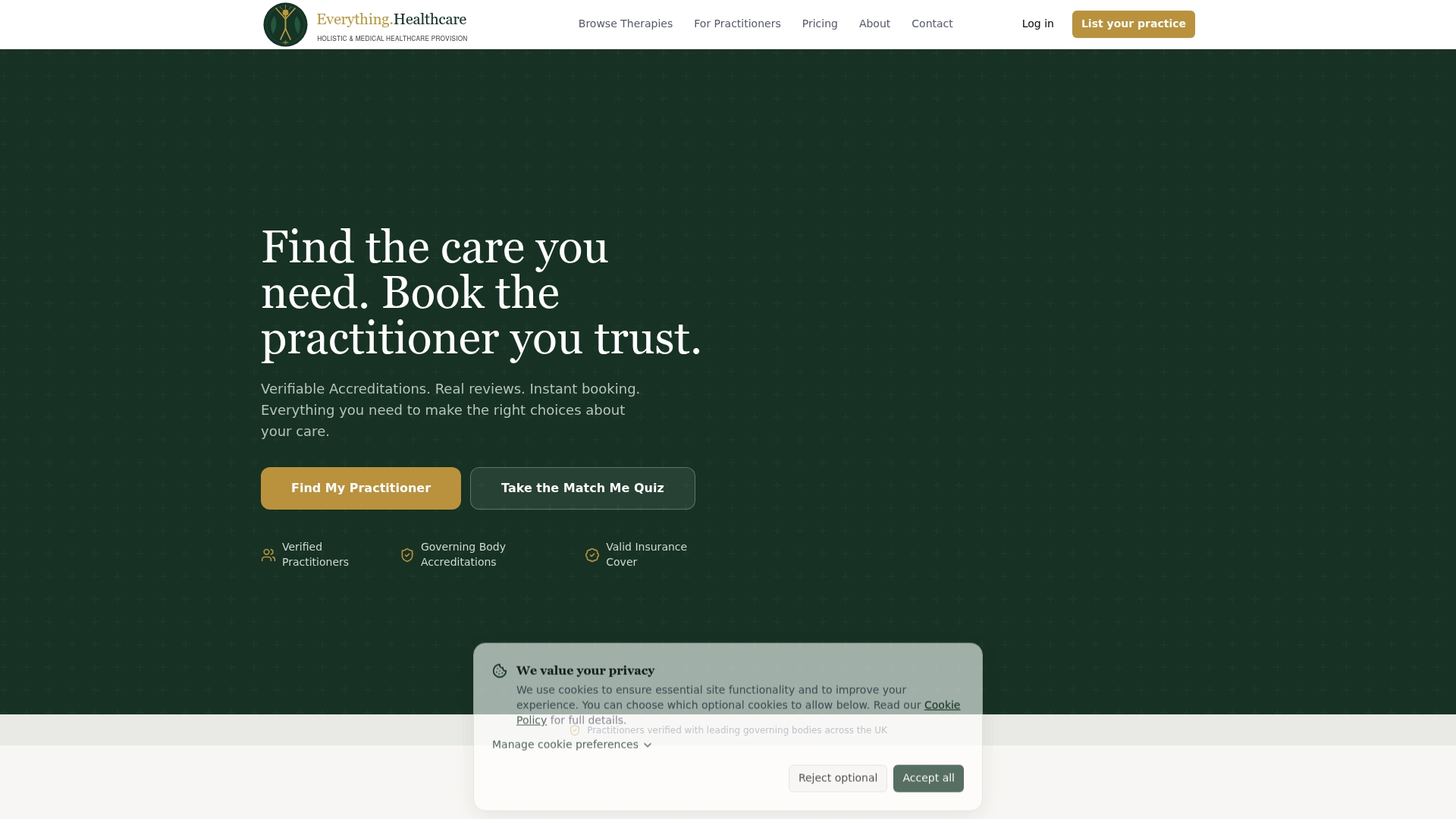
The Everything Healthcare platform was built precisely for this. Whether you are booking a physiotherapist, a nutritionist, a psychologist, or a telehealth consultation, every practitioner on the platform is verified, insured, and credentialled. No guesswork. No chasing. Founding practitioners joining now can access two years of free use with the code LAUNCH-2026. If you are ready to take control of your care and book with confidence, Everything Healthcare is where to start.
Frequently asked questions
What is the fastest way to book a GP appointment in 2026?
Using the NHS App or a verified online platform is the fastest and most reliable booking method for most UK patients. The NHS App has over 40 million registered users and manages millions of appointments and prescriptions each month.
What if I can't use digital platforms to book healthcare?
Reception staff can offer support, and many practices provide assisted booking for those without digital skills or devices. 1.6 million people lack devices and 7.9 million lack the skills needed, so practices are increasingly expected to offer ad-hoc support.
Are private wellness practitioners available to book through NHS digital platforms?
Most private wellness practitioners are not integrated into NHS bookings; you will need to use a verified wellness platform directly. Most wellness platforms are private and not yet connected to the NHS booking ecosystem.
How do digital bookings help reduce no-shows?
Features like automatic reminders, prescription tracking, and notifications significantly cut the rate of missed appointments. NHS App notifications are designed to reduce the no-show rate, which stood at 16 million missed appointments in 2025.